Merzbow: The Architect of Harsh Noise
"Noise is often dismissed as chaos. For Masami Akita, it is a language, an artistic medium, and a radical form of expression."
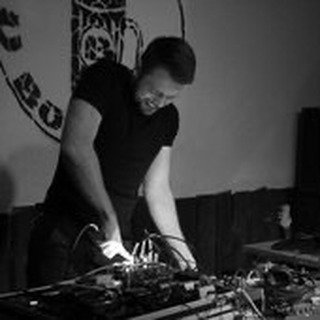
For more than four decades, Merzbow has stood as one of the most influential names in experimental music. Founded in Tokyo, Japan, by Masami Akita in 1979, the project has become synonymous with harsh noise, pushing the boundaries of what can be considered music. With more than 500 official releases, Merzbow is widely regarded as one of the most prolific recording artists in contemporary music history.
To some listeners, Merzbow sounds like an overwhelming wall of distortion and feedback. To others, it represents one of the purest explorations of sound as an artistic material, challenging traditional ideas of melody, rhythm, and composition.
The Origins of Merzbow
Masami Akita was born in Tokyo on December 19, 1956. During his youth, he immersed himself in psychedelic rock, progressive rock, free jazz, and early electronic music, all of which would later shape his unique sonic philosophy.
Before discovering noise music, Akita played drums in several high school bands. However, he quickly grew dissatisfied with conventional musical structures, seeking a more unrestricted form of artistic expression.
While studying fine art and art theory at Tamagawa University, he became fascinated by Dadaism, Surrealism, and Butoh dance. During this period, he encountered the work of German Dada artist Kurt Schwitters, particularly his monumental installation Merzbau. Inspired by Schwitters' concept of transforming discarded objects into art, Akita adopted the name Merzbow, combining "Merz" with "bau" as a tribute to this philosophy of creative reconstruction.
Early Experiments (1979–1989)
Merzbow began as a duo consisting of Masami Akita and his longtime friend Kiyoshi Mizutani.
Rather than relying on traditional instruments, their early recordings were built from an unconventional collection of sound sources:
- Tape loops
- Contact microphones
- Metal objects
- Springs
- Plastic materials
- Homemade instruments
- Household appliances
Akita developed a technique he called Material Action, in which ordinary objects became instruments through physical interaction. Bowing metal surfaces, scraping plastic, striking furniture, and overloading microphones became fundamental methods of creating sound.
Unable to find a home within the mainstream music industry, Akita established his own cassette label, Lowest Music & Arts, which later evolved into ZSF Produkt, an influential label within Japan's underground industrial scene.
The Birth of Harsh Noise
A major turning point came during Merzbow's European tour in 1989.
Limited by the portable equipment he could carry, Akita abandoned his earlier tape-based approach in favor of live electronic processing. This practical decision unexpectedly gave birth to the sonic identity that would define Merzbow for decades.
His music evolved into dense layers of:
- Extreme distortion
- Relentless feedback
- Electronic textures
- Improvised structures
- High-intensity sonic environments
The 1990 album Cloud Cock OO Grand is widely considered the beginning of Merzbow's modern sound.
Throughout the 1990s, albums such as Pulse Demon, Venereology, and Noisembryo established Merzbow as one of the leading figures in the global harsh noise movement. These recordings were intentionally mastered at exceptionally high volumes, creating an immersive physical listening experience.
Merzbox: A Monument to Productivity
In 2000, Merzbow released one of the most ambitious box sets in experimental music history.
Merzbox, a collection spanning 50 CDs, included twenty previously unreleased albums alongside numerous archival recordings.
The release not only showcased Akita's astonishing productivity but also introduced new audiences to the vast scope of his creative output.
From Analog Chaos to Digital Exploration
At the turn of the millennium, Akita embraced digital technology.
Laptop computers became central to both his studio recordings and live performances, while his artistic philosophy remained unchanged:
Sound itself is the instrument.
During this period, Merzbow incorporated:
- Granular synthesis
- Digital processing
- Animal field recordings
- Software manipulation
- Analog synthesizers
- Effects pedals
By the late 2000s, Akita gradually returned to a hybrid setup, combining digital tools with analog oscillators, pedals, homemade electronics, and acoustic drums.
Influences Beyond Music
Although Merzbow is most closely associated with harsh noise, Akita's influences extend far beyond experimental music.
- Progressive Rock
- Free Jazz
- Heavy Metal
- Industrial Music
- Musique Concrète
- Dadaism
- Surrealism
- Performance Art
- Junk Art
One particularly important influence was Lou Reed's Metal Machine Music, which Akita has described as a pivotal work that encouraged him to create music composed entirely of noise.
Animal Rights and Environmental Activism
Beginning in the early 2000s, Akita's personal life underwent a profound transformation.
After raising bantam chickens, he became increasingly aware of animal welfare and eventually adopted a vegan and straight edge lifestyle.
This ethical commitment soon became a recurring theme in his music. Numerous releases feature recordings of birds, chickens, and other animals, while albums such as Bloody Sea openly protest whaling and the exploitation of marine life.
For Akita, sound became another medium through which to express environmental and ethical concerns.
A Career Built on Collaboration
Despite his uncompromising artistic identity, Merzbow has collaborated with an extraordinary range of musicians across genres.
- Boris
- Keiji Haino
- Thurston Moore
- Mats Gustafsson
- Balázs Pándi
- Xiu Xiu
- Mike Patton
- John Duncan
- Maurizio Bianchi
These collaborations demonstrate that noise is not an isolated genre but a versatile artistic language capable of interacting with rock, jazz, metal, improvisation, and electronic music.
An Unmatched Legacy
With more than 500 official releases, countless collaborations, archival collections, live recordings, and multimedia projects, Merzbow remains one of the most prolific artists in contemporary music.
His influence extends far beyond the noise scene, inspiring generations of musicians working in industrial, drone, ambient, power electronics, and experimental sound art.
For many, Merzbow is not merely a musician but a living archive of sonic experimentation.
Redefining Music Through Noise
Merzbow's greatest achievement lies not simply in creating extreme sound but in redefining the very concept of music itself.
By rejecting conventional ideas of harmony, melody, and rhythm, Masami Akita transformed noise into a legitimate artistic language—one capable of expressing intensity, abstraction, beauty, confrontation, and freedom.
More than forty years after its inception, Merzbow continues to challenge audiences and expand the possibilities of sound art.
Merzbow is not simply a noise project—it is one of the most significant artistic statements in the history of experimental music.