Japanoise: A History of Circulation
Japanoise is often told as a story of Japanese extremity. Its history is less linear: a small, varied scene took shape through punk and experimental music, while recordings and the label itself moved across borders.
Japanoise is both a name for a Japanese noise scene and a story about how music gets named, heard, and moved. The genre’s history cannot be reduced to a single national origin or a steady line of stylistic influence: it involves earlier experiments with noise, Japan’s punk scene, small-scale recording networks, and overseas listeners who helped define the music as “Japanoise.”
Before the name
Noise music did not begin in Japan. Mixmag traces a prehistory through Luigi Russolo’s 1913 manifesto The Art of Noises, Dada performances, musique concrète in France, Japan’s Group Ongaku in the late 1950s, and the Fluxus movement in the United States during the 1960s. Those references describe different practices rather than one continuous genre, but they establish that artists had been testing music’s boundaries long before Japanoise became a familiar label.
Mixmag identifies Lou Reed’s 1975 double album Metal Machine Music as a prominent turning point in the wider history of noise. The record consists of extended feedback and guitar effects rather than conventional songs or melody, and the article says it later influenced the Japanoise movement. That influence belongs in a broader account of exchange: the scene developed in Japan, but its available precedents and reference points crossed national borders.
Japan’s musical history offers another context, though not a simple explanation for noise. David McMahon’s Nippon.com article describes features of traditional forms that may challenge listeners accustomed to Western musical expectations: dissonant clusters in gagaku, the breath and flutter of shakuhachi, and the silences and austere arpeggios associated with instruments such as the koto and biwa. These observations point to contrasts in how sound is organized and received; they do not establish that traditional Japanese music directly caused Japanoise.
Punk breaks toward noise
Mixmag places Japanoise’s emergence in Japan’s punk scene as that scene moved in a more anarchic direction in the late 1970s. It credits Hijōkaidan, initially a more conventional punk outfit, with bringing industrial and avant-garde influences into its music and developing a confrontational live approach. The group is widely credited in the article as the first true Japanoise band. That account makes punk a crucial local context, rather than treating the genre as a sudden invention detached from other musical activity.
The scene was not defined by one fixed sound. In an interview with Red Bull Music Academy Daily, ethnomusicologist David Novak recalls finding a range of approaches in Japan: artists might use electric guitar, pedals, or objects smashed onstage. What connected these practices was not a consistent technique or sound, but a shared quality of feeling. That variety matters. A history of Japanoise built around one supposedly definitive sound would flatten the differences among the musicians and performances that made up the scene.
A small scene, a travelling name
Novak’s account also complicates the image of a large, unified movement. He says the Japanese noise scene was small, and that the performers he encountered were often reluctant to call their work “noise,” much less “Japanoise.” Some, he recalls, thought the label gave people in the United States the wrong impression. The term was useful to listeners looking for a way to describe music arriving from elsewhere, but it did not necessarily reflect how the musicians understood their own work.
That difference between a name used by listeners and one accepted by performers is central to the genre’s history. The Duke University Press description of Novak’s book says noise recordings circulated on cassette between fans in Japan, Europe, and North America from the 1980s. As music travelled, it could seem new and foreign to each audience encountering it. The label “Japanoise,” in Novak’s formulation, is part of that reception: it describes a route through which the music was understood, not just a sound contained within Japan.
Novak describes the process as a feedback loop rather than a straightforward chronology. Recordings reached listeners who might have little information about their origins; those listeners developed an idea of the music and its place in Japan; later encounters could then test that idea against the practices and perspectives of musicians. The international audience was not simply receiving a finished genre. Its circulation helped shape what the genre meant.
Artists and shifting practices
Among the names repeatedly associated with the scene are Merzbow, Hijōkaidan, Incapacitants, and C.C.C.C. Nippon.com also places Haino Keiji and Ōtomo Yoshihide among influential Japanese experimental musicians, while cautioning that the broader field includes participants from punk, jazz, metal, electronic music, contemporary classical music, and sound art. These names and strands do not describe a single school; they indicate the breadth of activity gathered under the noise umbrella.
Merzbow’s career offers one example of change within that history. The Quietus describes Masami Akita’s early use of tape loops to build industrial soundscapes, followed by a move toward laptop-generated static noise around the turn of the century. The article also notes a group of harsh-noise releases in the 1990s, including Venereology, Pulse Demon, 1930, and Door Open at 8am. These details show how an artist’s methods and output could shift over time, rather than representing Japanoise as a style frozen at its point of emergence.
Reissues and the question of access
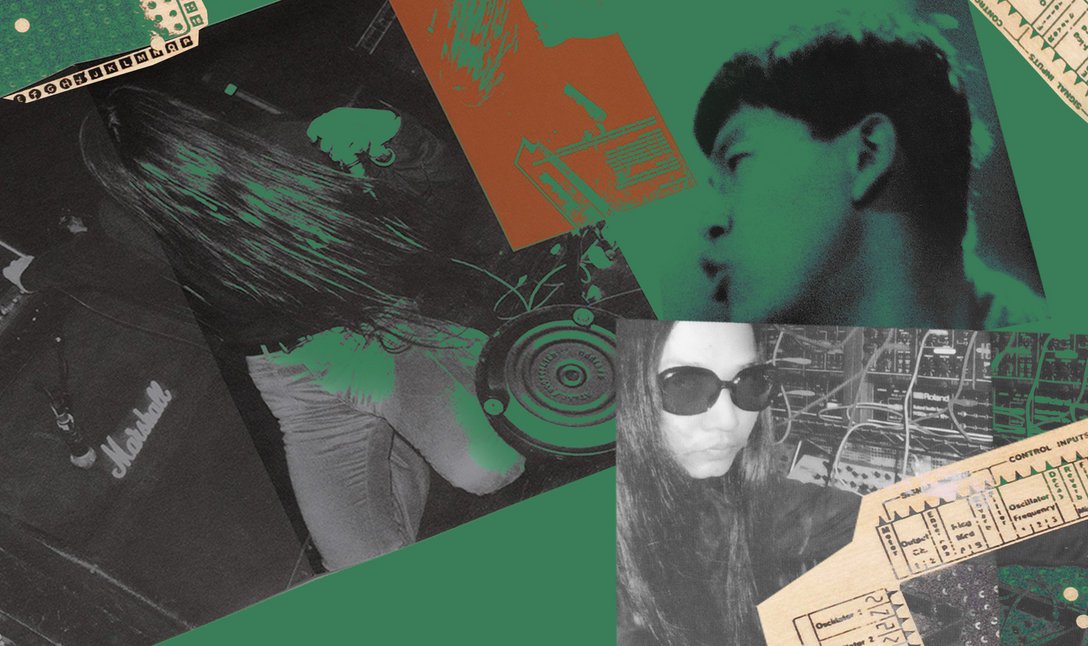
More recent reissues have changed how listeners encounter the scene’s past. Bandcamp Daily reports that Italian label Urashima began reissuing Japanese noise recordings in 2012, including rare material by Merzbow, and later expanded its catalogue to artists such as Masonna, Incapacitants, and M.S.B.R. Some reissues brought back recordings that had received little distribution when they first appeared.
That recovery creates a tension. Greater availability helps listeners hear work that was once difficult to find, but it can also alter the appeal of music associated with obscurity and limited circulation. Bandcamp Daily notes that some collectors may resent the wider release of recordings previously accessible only through scarce tapes. The contradiction is not incidental to Japanoise history: circulation can preserve and reveal music while changing the conditions that once made it underground.
History without a single origin
Japanoise’s history is therefore more than a catalogue of extreme sounds or influential artists. It joins earlier experiments in noise to a Japanese punk context, encompasses diverse musical practices, and follows recordings as they move between local scenes and international listeners. Its name records that movement as much as it identifies a place.
That account also resists turning Japan into a convenient explanation for unfamiliar sound. The sources describe musicians, networks, and listeners, not an unchanging national character. Japanoise became historically significant through the interaction of those people and routes: making, recording, performing, trading, interpreting, and reissuing noise across changing contexts.
Watch
COLD SPRING JAPANOISE MIX by Gydja — coldspringhq, via YouTube.
Sources
- Mixmag Asia, “Come on, feel the Japanoise”
- Duke University Press, Japanoise: Music at the Edge of Circulation
- Nippon.com, “Experimental Music from Japan: Folk Roots, Noise Routes”
- The Quietus, “Razor Blades In The Dark: An Interview With Merzbow”
- Red Bull Music Academy Daily, “Interview: David Novak on Noise, Fukushima and More”
- Bandcamp Daily, “The Italian Label Quietly Reissuing Rare Japanese Noise”
Sources
- mixmag.asia
- dukeupress.edu
- nippon.com
- thequietus.com
- daily.redbullmusicacademy.com
- daily.bandcamp.com
- Image: Artwork: The Italian Label Quietly Reissuing Rare Japanese Noise, from the Bandcamp release page